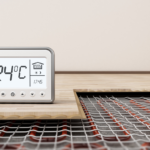
Underfloor heating is a fantastic way to keep your home warm and cozy. Put simply, it works by heating up the floor and radiating the heat upwards, creating a comfortable environment. We’ll take a closer look at how underfloor heating works, and the different types available.
Underfloor heating uses a system of pipes or electric wires installed beneath the floor. These pipes or wires are like a network running through your floor, carrying warmth throughout the room. When you turn on the heating system, it starts to generate heat.
For wet or hydronic underfloor heating, hot water flows through the pipes. The water is heated using a boiler or a heat pump. As the hot water passes through the pipes, it warms up the floor. The warmth from the floor then spreads out, making the whole room feel nice and toasty.
With electric underfloor heating, there are thin electric wires or a heating mat under the floor. When electricity passes through these wires, they get hot and warm up the floor. Just like with the wet system, the heat rises from the floor and fills the room with cozy warmth.
Dry underfloor heating is a bit different. Instead of using water or electricity, it uses special materials that can store and release heat. These materials are often in the form of mats or boards that contain tubes or wires. When these materials are heated, they store the warmth and slowly release it, making the floor and the room nice and warm.
So, to summarize, underfloor heating works by either circulating hot water through pipes, using electric wires to generate heat, or by using special materials that store and release warmth. In all cases, the heat spreads from the floor upwards, keeping you comfortable and your space cozy.
Remember, underfloor heating comes in different types, including wet or hydronic, electric, and dry systems. Each has its own way of generating and distributing heat, but they all aim to provide a warm and inviting atmosphere in your home.